Working Safely in Trenches: The Most Important Rules in Civil Engineering
Understanding the Hazards in Trenches
The risks in trenches are diverse: wall collapses, water or gas ingress, falling objects, or the entrapment of individuals. Most accidents occur due to non-compliance with safety regulations or inadequate equipment. A clear assessment of the hazards is the first step towards safety. Before the excavator rolls, the work area should be secured – with barriers, warning signs, and adequate lighting.
Trench Depth and Safety Classes
Trenches are classified by depth and condition. Above a certain depth – typically over 1.20 meters – stricter requirements apply for trench support, access security, and monitoring. If these limits are not met, basic protective measures must still be taken. The classification determines which measures are mandatory and when.
Trench Support or Slope
Every trench must be protected against collapse. There are two proven methods: systematic support using components like formwork and struts or creating a sufficiently shallow slope. The choice depends on soil type, trench depth, and local conditions. Loose soils generally require support, while solid ground allows for a steeper slope. In changing soil conditions, the more cautious approach should always be taken.
Access and Security
Only designated personnel may enter the trench. Access must be safely ensured – via ladders, ramps, or stairs that are slip-resistant and adequately sized. The edge of the trench must be kept clear of heavy objects to prevent slipping. Additionally, the work area in the trench should be adequately ventilated, especially concerning hazardous substances or oxygen deficiency.
Construction Machinery in the Trench
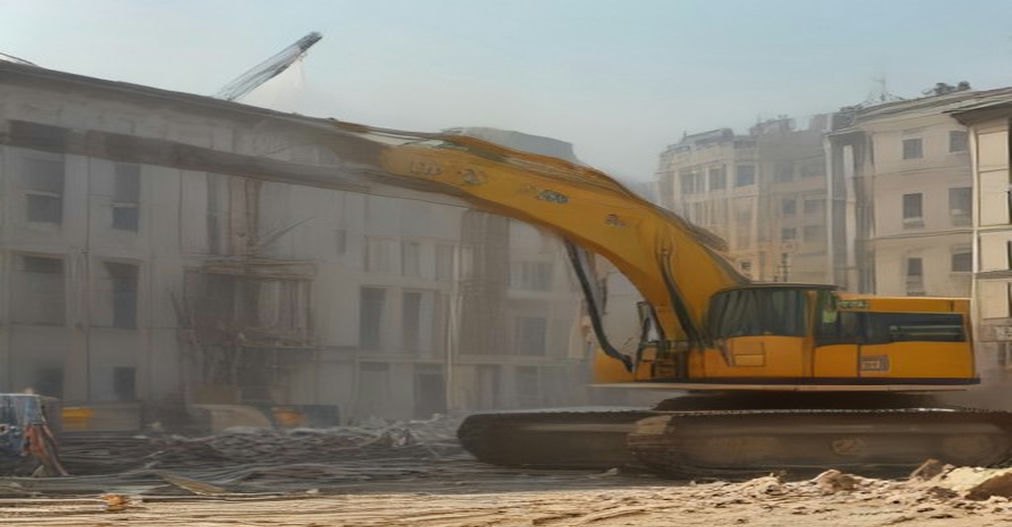
When an excavator is working in the trench, the machine must be positioned stably. The ground, reach, and positioning should be checked in advance. A poorly placed machine can destabilize the trench profile and lead to a collapse. Operation by trained personnel is mandatory – and this applies not only to the excavator operator but to everyone in the danger area.
Rescue and Emergency
Every trench must have a rescue option – preferably a fixed ladder that is always accessible. A rescue plan should be discussed and practiced in advance. In an emergency, every second counts. Colleagues outside the trench must know what to do in an emergency and have suitable rescue equipment available.
Training with DGUV Certification
Safety in civil engineering is not a given. The DGUV requires that employees operating construction machinery must provide proof of qualified training. At Baggerschule1, you can conveniently learn the theory online and practice directly on the excavator. The course includes 12 chapters with over 70 lessons in 14 languages, a theoretical exam, and a practical day with assessment. The certificate is issued according to DGUV guidelines. The price is €499 per participant.
For more information and the opportunity to register, visit https://baggerschule1.de.